In many modern electronic systems, transparency is no longer a visual feature—it is a functional requirement tightly coupled with electrical performance.
Applications such as optical sensors, biosensing devices, display-related components, flexible electronics, insulation layers with visual access, and precision electronic assemblies require materials that deliver high light transmission while maintaining electrical insulation and long-term reliability.
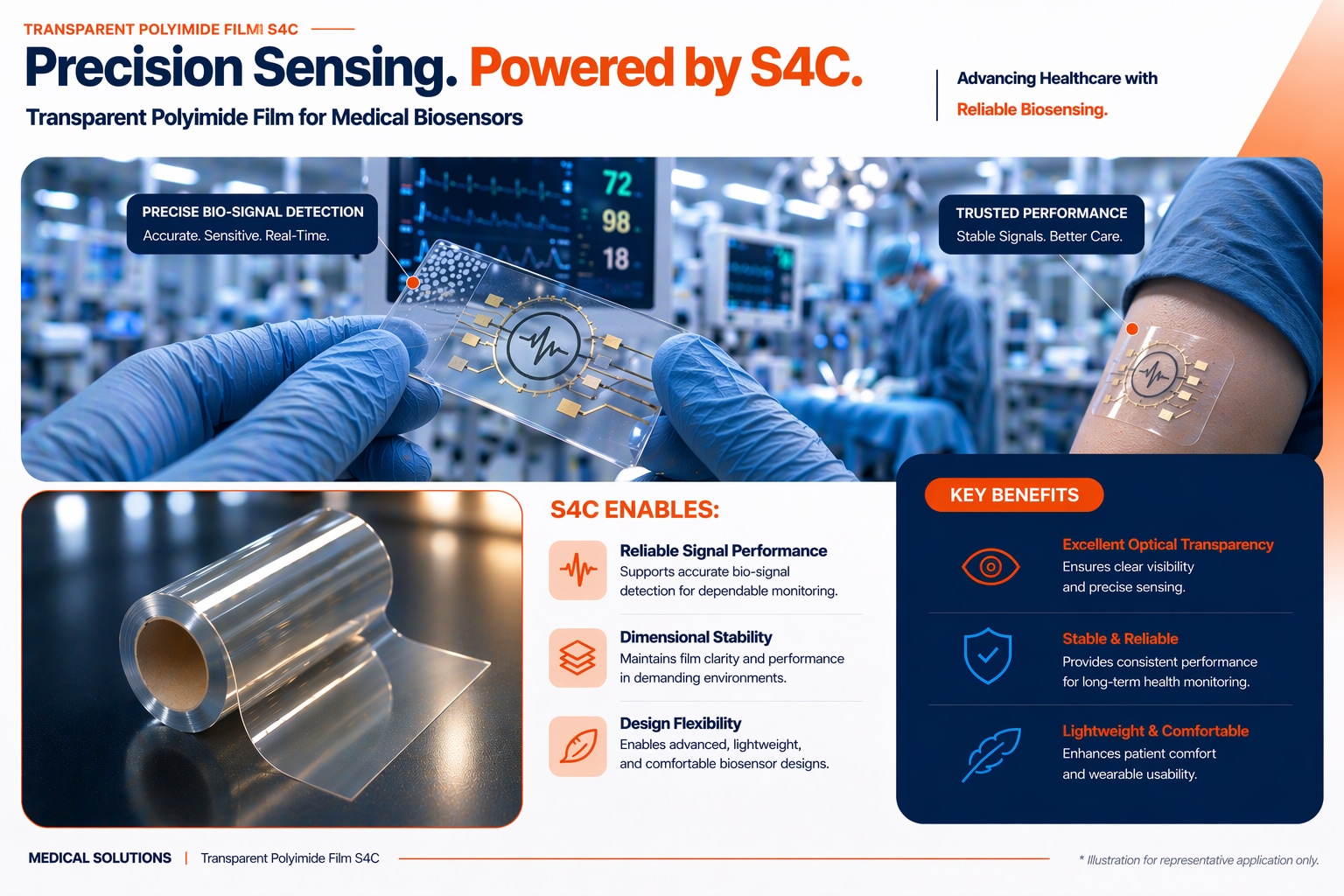
Transparent PI Film (S4C) is engineered for these applications, combining high optical transmittance, low haze, and low yellowness with high dielectric strength, enabling clear visibility without sacrificing electrical safety. It addresses stability and noise issues commonly encountered when transparent materials are introduced into precision modules.
Designing with transparent materials introduces challenges that are often underestimated in early design stages.
Engineers commonly encounter:
Loss of optical clarity due to haze or light scattering
Yellowing that alters optical appearance after processing or aging
Trade-offs between transparency and electrical insulation
Inconsistent optical performance across production lots
Materials that look clear initially but degrade during manufacturing
In practice, optical instability and electrical reliability issues often emerge only after scaling to production, not during initial evaluation.
Our Transparent PI Film S4C is engineered to deliver optical clarity that remains stable throughout processing and long-term use, while maintaining the intrinsic reliability of polyimide.
Our approach focuses on:
High transmittance with low haze control
Ensuring light passes cleanly without distortion
Low yellowness formulation
Preserving neutral optical appearance during processing and aging
High dielectric strength
Maintaining electrical insulation in transparent design zones
Material consistency by design
Providing predictable optical and electrical behavior across production lots
Rather than optimizing for a single optical metric, S4C is engineered as a balanced transparent PI platform that engineers can confidently design into real systems.
Our Transparent PI Film S4C is typically used in design areas where optical access and electrical insulation must coexist, such as:
Transparent insulation layers above or near optical or sensing components
Electrically active regions requiring visual access or light transmission
Visual access windows for alignment, sensing, or inspection
Flexible electronic assemblies requiring both transparency and reliability
Optical and display-related modules with integrated electrical functions
By integrating S4C at the material level, engineers can achieve optical clarity without adding secondary layers or compromising electrical safety, simplifying system design and improving long-term reliability.
Optical sensors and imaging-related components
Biosensing and signal-detection systems
Display and illumination-related electronic assemblies
Flexible electronics requiring transparent insulation
Electronic modules requiring visual access for alignment or inspection
Applications where optical clarity and electrical safety must coexist
In biosensor systems, transparency alone does not guarantee reliable sensing performance. Many transparent materials meet initial optical requirements, yet fail at the system level once electrical integration, processing, and long-term operation are considered.
Common failure mechanisms include:
Optical instability over time
Materials with increasing haze or discoloration can alter signal intensity and introduce calibration drift.
Light scattering and internal reflection
Insufficient control of haze and surface behavior leads to signal noise and reduced signal-to-noise ratio.
Electrical reliability limitations
Transparent materials without adequate dielectric strength can compromise insulation near electrodes and signal traces.
Inconsistent material behavior between lots
Variations in optical or electrical properties often appear only during volume production, not at prototype stage.
Mismatch between optical clarity and system integration
Materials optimized only for transparency may degrade during lamination, processing, or prolonged operation.
In biosensor design, these issues do not usually cause immediate failure—but they gradually erode signal stability, repeatability, and long-term reliability, which are critical for sensing accuracy.
Reliable biosensor performance requires transparent materials that are engineered not just to transmit light, but to maintain optical clarity, electrical insulation, and material consistency throughout the entire system lifecycle.
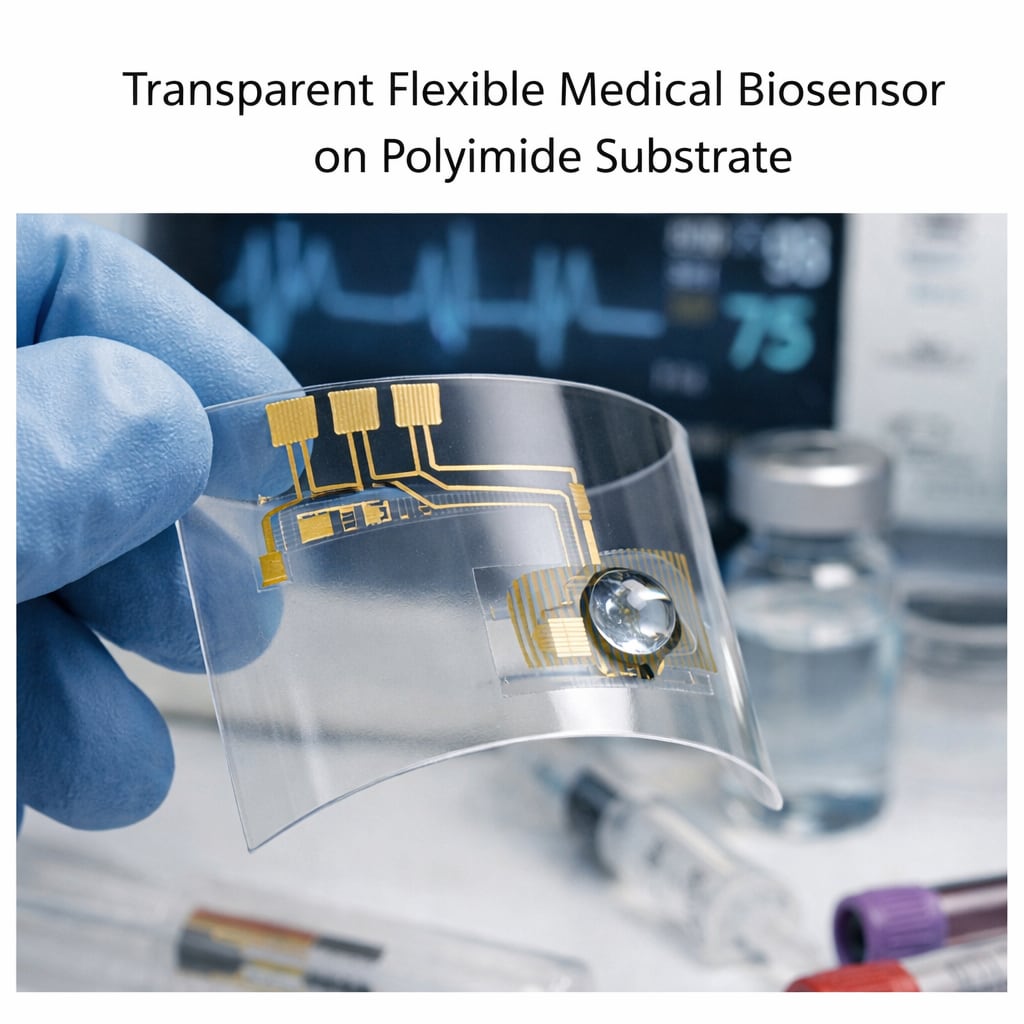
Representative transparent flexible biosensor illustrating optical access and electrical integration on our transparent polyimide film S4C substrate.

Contact us to discuss Transparent Polyimide Film (S4C) solutions aligned with your optical, electrical, and manufacturing requirements.
Taiwantrade.com and iDealEZ.com uses analytical cookies and other tracking technologies to offer you the best possible user experience. By using our website, you acknowledge and agree to our cookie policy.
For more information on cookies or changing your cookies settings, read Taiwantrade & iDealEZ’s Privacy Policy.
