Our PI-Derived Synthetic Graphite Sheet MGS is a high-performance, ultra-thin thermal spreading material engineered from our high performance polyimide film through advanced high-temperature carbonization and graphitization processes.
By precisely controlling the sintering and graphitization conditions, MGS forms a highly oriented lamellar graphite lattice structure, enabling exceptional in-plane (X–Y) thermal conductivity. This structure allows heat to be rapidly and uniformly distributed across the surface, effectively reducing localized hot spots in compact electronic assemblies.
MGS combines ultra-high thermal conductivity, low thermal resistance, flexibility, and lightweight characteristics, making it an ideal solution for next-generation thermal management applications where space, weight, and mechanical compliance are critical.
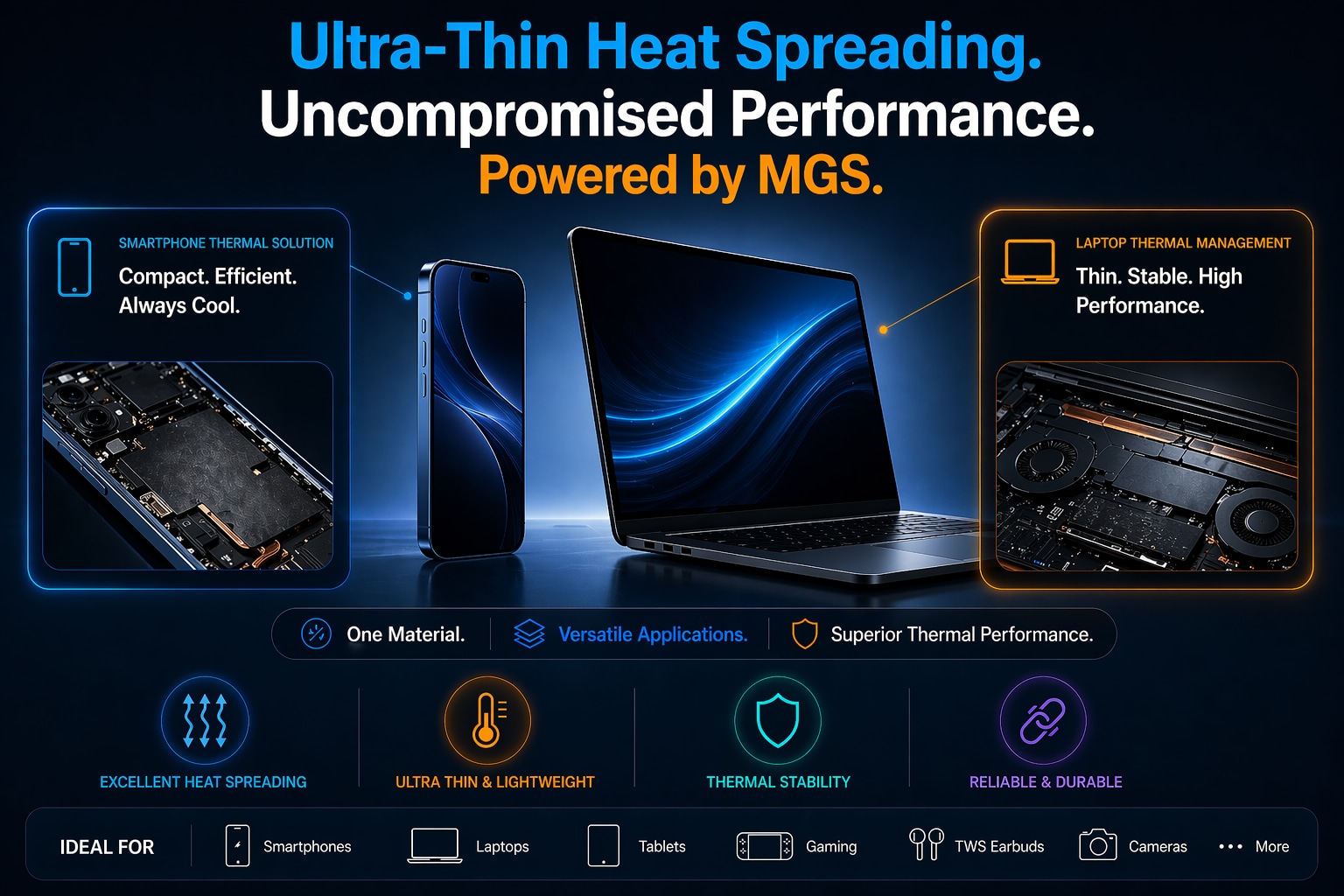
Thickness: 23µm, 32µm, 45µm, 50µm
Width: 140mm/280mm/ Custom sizes available
Engineers working on compact and high-power assemblies commonly face:
Localized hot spots near ICs, power devices, or LEDs
Limited vertical space preventing thicker heat sinks
Inefficient heat distribution causing temperature gradients
Trade-offs between thermal performance and mechanical flexibility
Inconsistent thermal behavior across different product areas
In many cases, heat exists—but has nowhere to go laterally.
MGS is engineered as a functional heat-spreading layer, derived from polyimide to ensure structural consistency and process stability, featuring:
Ultra-high in-plane thermal conductivity
Rapidly spreading heat across the surface to reduce hot spots
Low through-plane thermal resistance
Supporting integration with interface materials and heat sinks
PI-derived structure for dimensional and thermal stability
Maintaining performance under thermal cycling and long-term operation
Thin, lightweight, and flexible form factor
Enabling integration in space-constrained and compact designs
Unlike generic graphite materials, MGS is designed to behave as a predictable and controllable thermal layer within electronic assemblies.
MGS is not intended to replace thermal interface materials or heat sinks.
Instead, it works in combination with them:
MGS → spreads heat laterally
TIS / TIM → conducts heat vertically
Heat sink / chassis → dissipates heat to the environment
This layered approach allows engineers to separate heat spreading from heat dissipation, optimizing each function independently.
Engineered vs. Natural: Choosing the Right Graphite for Thermal Performance
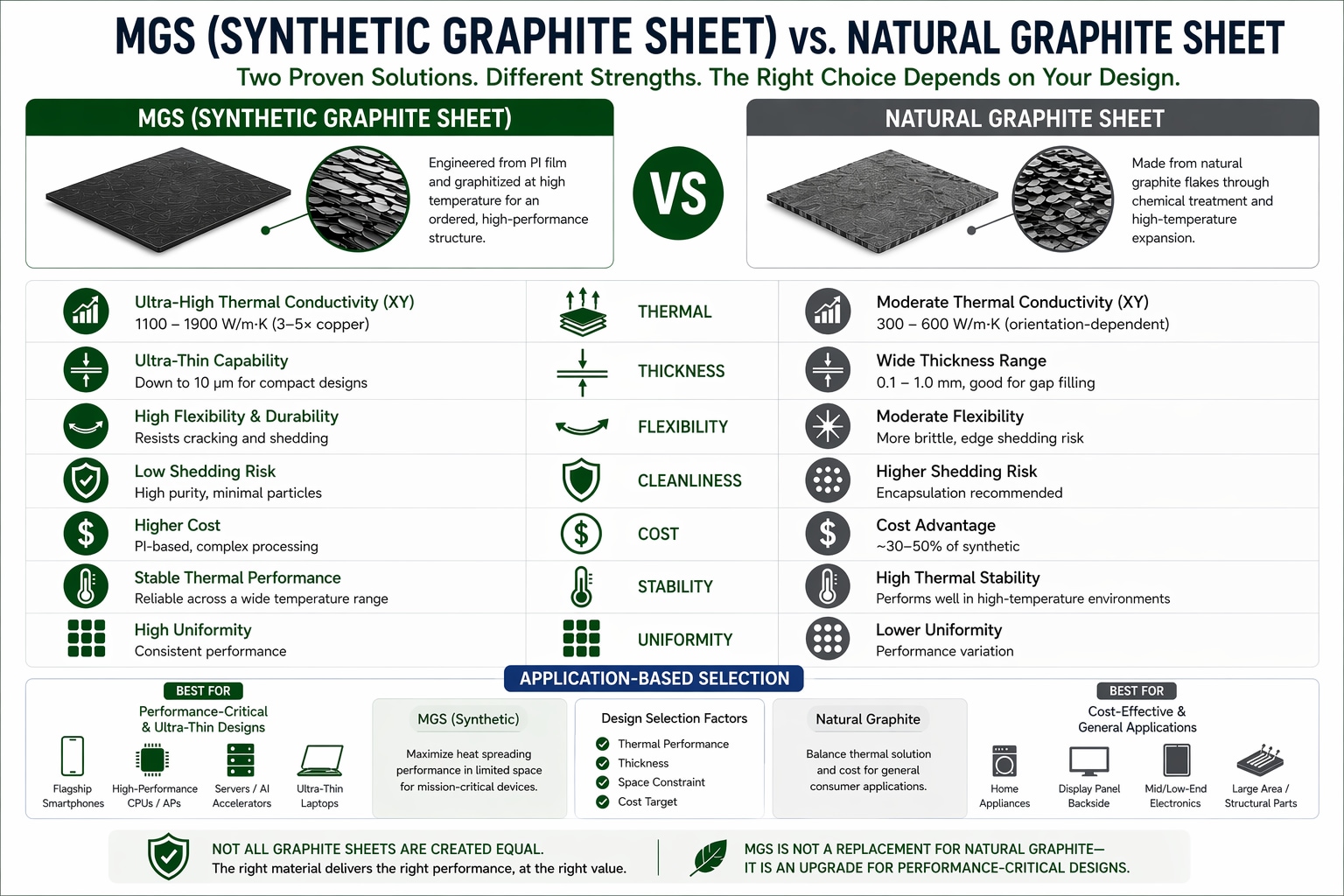
A side-by-side comparison of synthetic (MGS) and natural graphite sheets, highlighting key differences in thermal conductivity, thickness capability, flexibility, cleanliness, and cost—helping engineers select the right material based on design priorities.
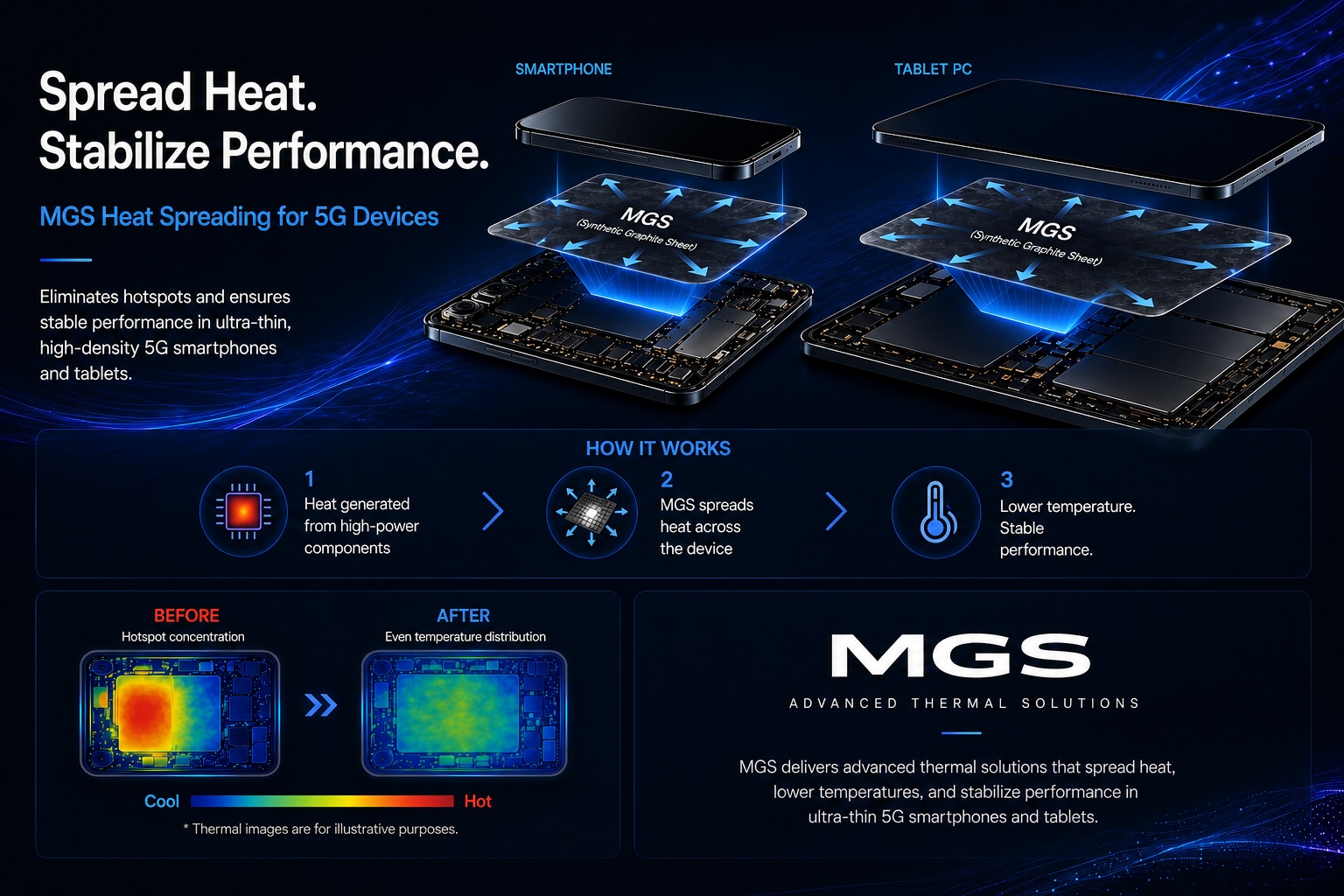
MGS (Synthetic Graphite Sheet) rapidly spreads heat across high-density smartphone and tablet layouts, eliminating hotspots and ensuring stable performance in ultra-thin 5G devices.
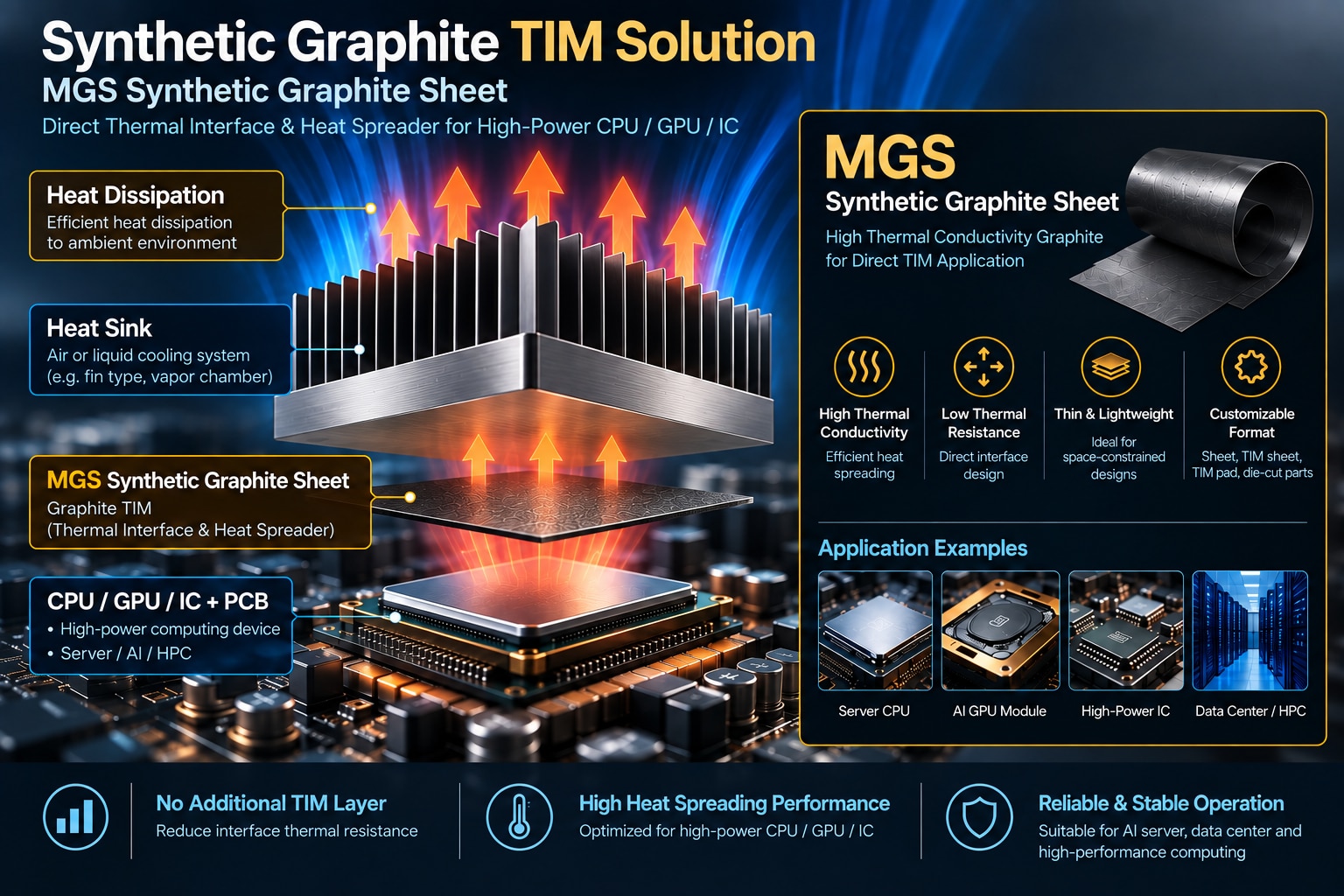
MGS Synthetic Graphite Sheet can function as a direct thermal interface and heat-spreading layer between high-power CPU, GPU or IC devices and the heat sink, providing efficient in-plane heat spreading while minimizing additional interface layers.
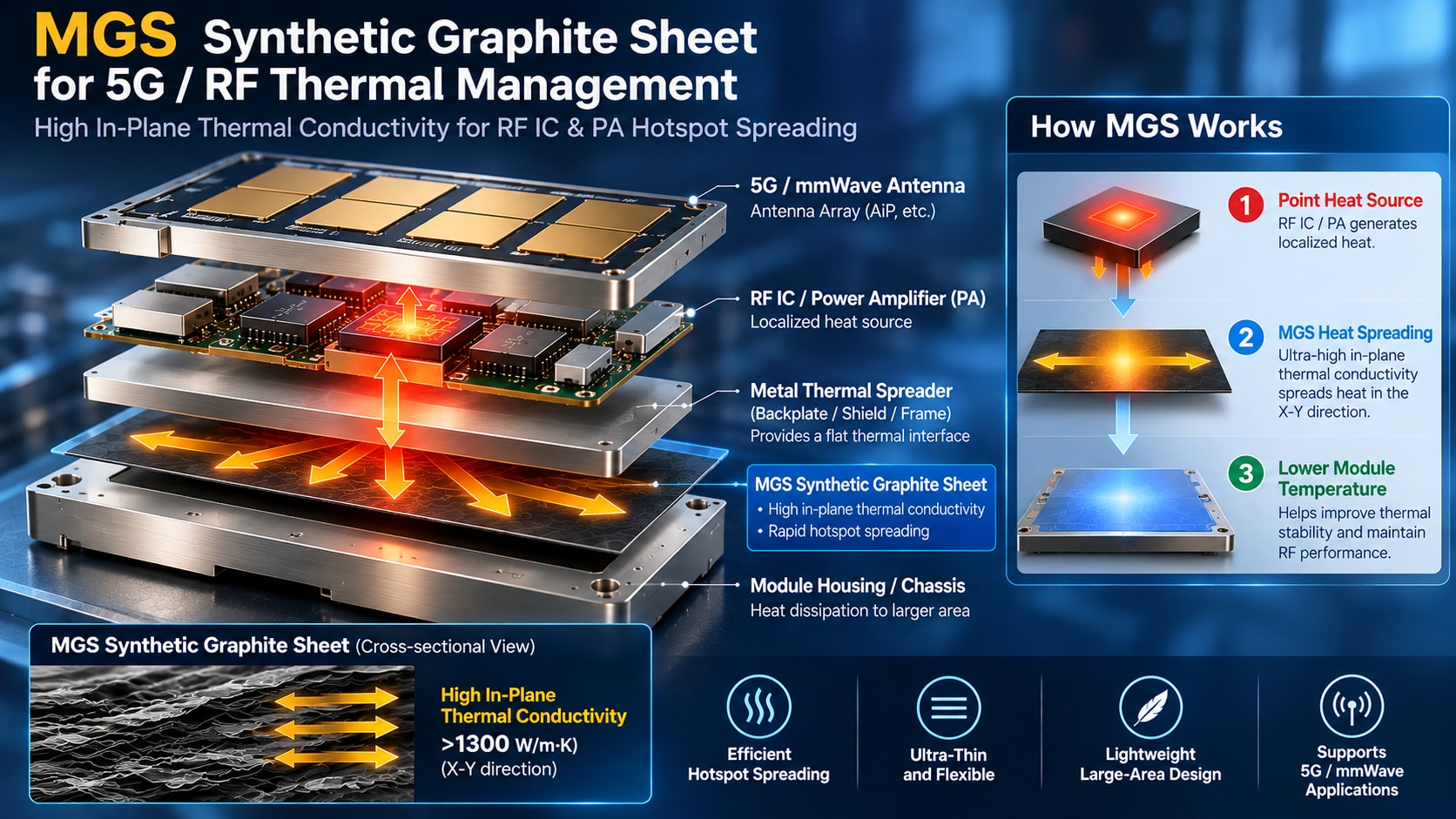
MGS Synthetic Graphite Sheet enables rapid in-plane heat spreading from localized RF IC and power amplifier (PA) hotspots, helping distribute heat across a larger area for 5G and mmWave thermal management.
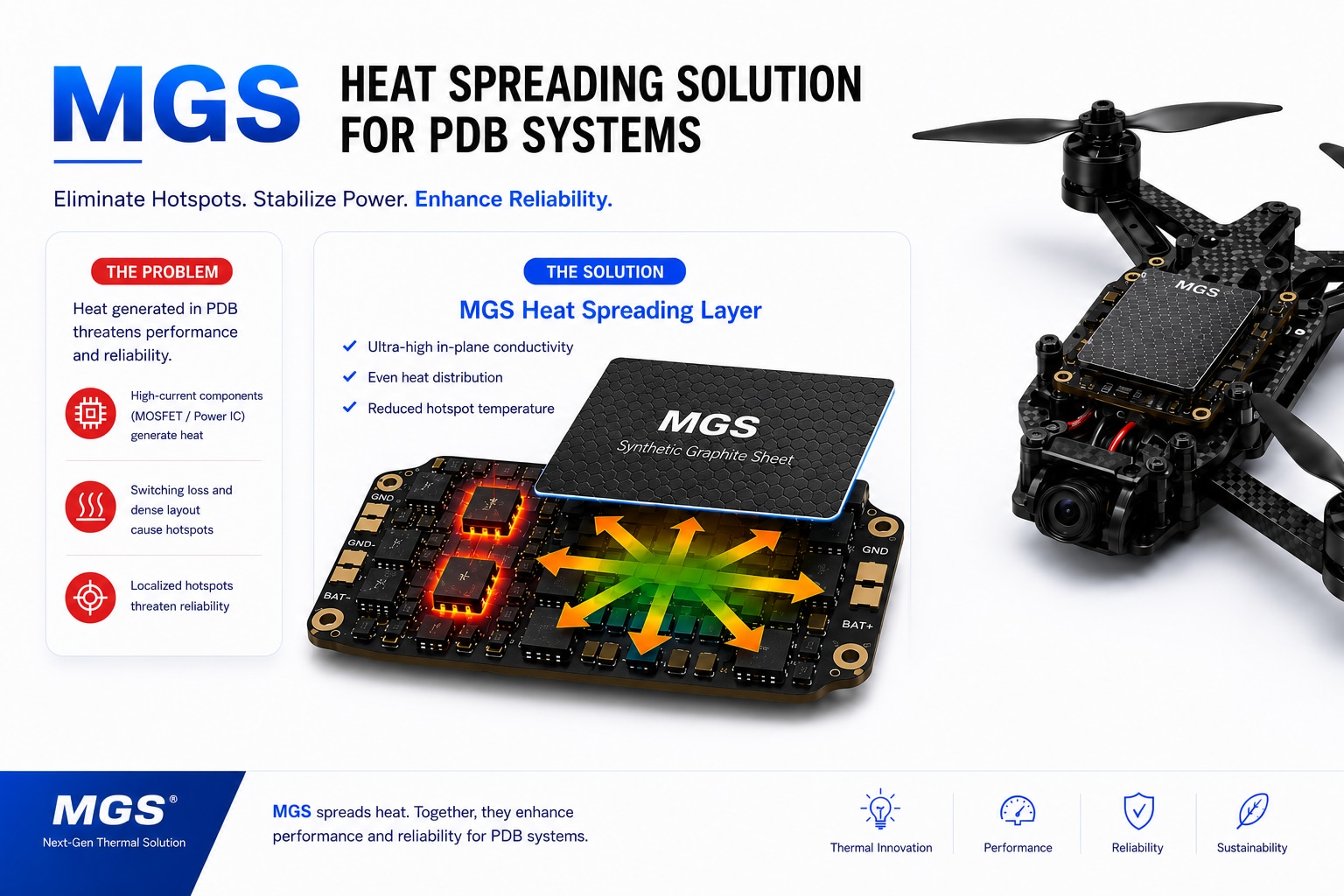
MGS (Synthetic Graphite Sheet) rapidly spreads heat across high-power PDB layouts, eliminating hotspots, reducing peak temperature, and improving system reliability in space-constrained drone platforms.
Contact us to discuss PI-Derived Synthetic Graphite Sheet (MGS) solutions optimized for your thermal layout, space constraints, and reliability requirements.

Taiwantrade.com and iDealEZ.com uses analytical cookies and other tracking technologies to offer you the best possible user experience. By using our website, you acknowledge and agree to our cookie policy.
For more information on cookies or changing your cookies settings, read Taiwantrade & iDealEZ’s Privacy Policy.
